

Pengutronix at FOSDEM and OE Workshop 2026
On January 31st and Febuary 1st 2026 it is once again time for waffles, Belgian beer and Open Source: FOSDEM will take place at ULB in Brussels. With over 8k hackers, FOSDEM is the biggest and most important Open Source conference in Europe. One other event riding the wave of FOSDEM is the the OpenEmbeddedWorkshop. The full list of co-located events is here. We are participating in both FOSDEM and OE Workshop and are looking forward to many interesting discussions with developers of different Open Source software components – be it the Linux kernel, Yocto, Labgrid, Debian, and others...
If you want to meet with us, the fastest way is to join our public Matrix room: https://matrix.to/#/#pengutronix:matrix.org.
FOSDEM
We are proud to attend FOSDEM with 13 colleagues. Big thanks to Ahmad and Jonas who contributed a total of three talks to the FOSDEM schedule:
Build Once, Trust Always: Single-Image Secure Boot with barebox
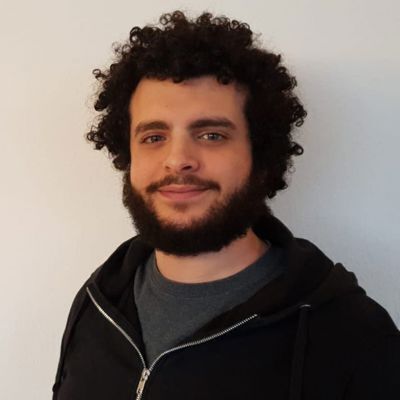
Ahmad Fatoum
Secure-boot projects often end up with a zoo of nearly-identical bootloader images for development, factory, and field use with each variant adding more risk. This showcase illustrates how to avoid this entirely: one bootloader image that adapts securely to each lifecycle stage using fuse-based state transitions, device-bound unlock tokens, and policy-driven access control. With barebox and OP-TEE, we’ll show how these mechanisms enforce secure operation while still allowing controlled debugging and recovery, without ever maintaining multiple images.
Netboot without throwing a FIT
For years, Ahmad’s ideal has been simple: unpack a rootfs on a server, mount it over NFS (or usb9pfs), boot directly into it, and everything just works™. But as secure boot becomes the default on many embedded systems, squeezing in a network-booted kernel is getting harder and often falls outside the supported boot flow entirely. Fortunately, some recent improvements in the kernel build system pave the way for a far less invasive netboot setup. This talk gives a quick tour of the key pieces:
- The image.fit target for arm64 introduced in v6.10
- The modules-cpio-pkg target introduced in v6.19
- Initramfs that bind mounts its modules over the rootfs
- Optional concatenation of multiple initramfs in the bootloader
In ten minutes, you’ll see how these changes raise the netboot FITness of Linux, so you can keep printk-debugging to your heart’s content.
Tamper-resistant factory data from the bootloader
Secure-boot chains in embedded systems have largely converged on common building blocks like FIT, dm-verity or UKIs. The bootloader is anchored in hardware trust, then verifies an operating system image, and the chain continues, eventually covering the application. But there is a gap when it comes to adding unit-specific bits of information, such as per-device configuration, hardware calibration, or MAC addresses needed early in boot.
In this segment, I present the TLV framework recently added to the barebox bootloader, to which I contributed signature support. It allows device-specific key-value pairs to become part of the secure-boot chain from early on, providing the system with authenticated, replay-protected per-unit data.
This short presentation discusses - factory data and its relevance to a secure-boot chain - the barebox implementation using a signed Tag-Length-Value format - when and how to prevent interchange of TLV blobs across units - integration of the new feature.
OE Workshop
The Yocto Project and OpenEmbedded are a cornerstone of the work at Pengutronix. So a total of 6 colleagues will participate in the OE workshop on the 02. Febuary at the Open Embedded Workshop 2026 in the Silversquare Delta in Brussels.
Weiterführende Links
Pengutronix at the Open Source Firmware Conference 2026
This year's Open Source Firmware Conference took place from September 15th to 17th at Pakhuis de Zwijger in Amsterdam. Marco Felsch and I attended for Pengutronix and had three talks between us:
Pengutronix auf den Chemnitzer Linux Tagen 2026
Wir freuen uns, auch in diesem Jahr bei den Chemnitzer Linux Tagen dabei sein zu können. Wie jedes Jahr sind die CLT eine willkommene Gelegenheit, Freunde zu treffen und sich über Linux, Open Source und den Rest der Welt auszutauschen. Auch in diesem Jahr stellen wir uns mit einem eigenen Stand vor und freuen uns, vier Vorträge zum Vortragsprogramm beitragen zu können.
Pengutronix bei der Embedded Testing 2026
Pengutronix ist in diesem Jahr wieder Partner der der Embedded Testingu nd ist dort sowohl mit einem Stand als auch mit einem Vortrag vertreten. Die Embedded Testing findet am 24. und 25. Februar 2026 in Unterhaching bei München statt.
Pengutronix at FOSDEM and OE Workshop 2025
On 1. and 2. February 2025 it is time for waffles, Belgian beer and Open Source: FOSDEM will take place at ULB in Brussels. With over 8k hackers, FOSDEM is the biggest and most important Open Source conference in Europe. One other event riding on the wave of FOSDEM is the the OE Workshop (See the list of other events here.) We are participating in both FOSDEM and OE Workshop and are looking forward to many interesting discussions with developers of different Open Source software components - be it the Linux kernel, Yocto, Labgrid, Debian, KiCAD, ...
Pulse Width Modulation (PWM) is easy, isn't it? - Turning it off and on again
Part of Uwe Kleine-König's work at Pengutronix is to review PWM (Pulse Width Modulation) drivers. In addition, he also sometimes refactors existing drivers and the Linux kernel PWM subsystem in general.
FOSDEM 2023
Die Pengutronix Crew ist wieder mit einer größeren Gruppe auf dem Weg zur FOSDEM in Brüssel! Und auch in diesem Jahr sind wir wieder auf der Suche nach vielen spannenden Diskussionen mit den Entwicklern der verschiedensten Open Source Komponenten - vom Linux Kernel über Debian bis hin zu KiCAD, FreeCAD etc...